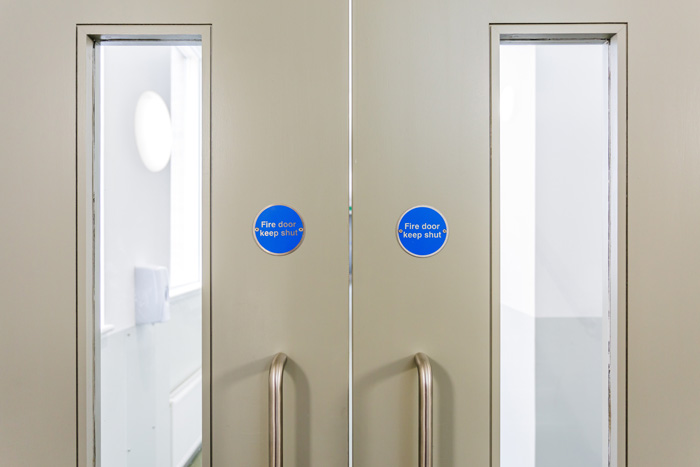
What Are Fire Door Inspections in the UK?
Fire door inspections in the UK are legally required checks, designed to ensure that fire doors are fully operational, compliant, and capable of stopping the spread of fire and smoke within a building. These inspections are a critical aspect of property fire safety, applicable to commercial, public, and multi-occupied residential premises.
At Wyvern Risk Management, we know fire doors play a life-saving role by providing protected escape routes and helping to confine fire, giving the fire brigade and occupants vital time in an emergency. So, what are fire door inspections in the UK? They are thorough assessments to guarantee your fire doors remain fit for purpose, supporting workplace and residential safety and demonstrating legal compliance.
Are Fire Door Inspections a Legal Requirement in the UK?
Yes, fire door inspections are a legal requirement in the UK.
Under the Regulatory Reform (Fire Safety) Order 2005, the “Responsible Person”, often the landlord, employer, or building owner, must ensure fire safety equipment, including fire doors, is maintained in proper working condition. Fire & Rescue Authorities have the power to enforce these obligations, with severe penalties such as unlimited fines and even prosecution for non-compliance. Insurance policies can also be invalidated if regular maintenance and inspections are neglected. Demonstrating compliance through regular, documented inspections helps minimise risk, protect lives, and ensure peace of mind.
How the Regulatory Reform (Fire Safety) Order 2005 Applies to Fire Doors
The Regulatory Reform (Fire Safety) Order 2005 is a key piece of legislation that sets out the legal obligations for fire safety in non-domestic premises across the UK. Understanding how it applies to fire doors is crucial for landlords, building owners, and managers.
Here is how this order applies to fire doors, from the scope of premises it covers, to the responsibilities it assigns and the penalties for failing to meet its requirements:
Applies to All Non-Domestic Premises
This legislation covers workplaces, communal residential areas, and public buildings throughout the UK.
Defines the Responsible Person
Employers, building owners, landlords, and managing agents are held accountable for fire safety within their premises.
Maintenance of Fire Safety Measures is Mandatory
Fire doors, as vital protective measures, must be routinely maintained in efficient working order.
Non-Delegable Ultimate Responsibility
While tasks can be assigned, legal responsibility for fire safety cannot be delegated or ignored.
Enforcement and Penalties
Local Fire & Rescue Authorities oversee enforcement and can issue improvement or prohibition notices if fire safety requirements are not met.
Unlimited Fines and Prosecution
Courts may impose unlimited fines or custodial sentences for serious breaches, making compliance absolutely essential.
What Do the Fire Safety (England) Regulations 2022 Require for Fire Door Inspections?
The Fire Safety (England) Regulations 2022 introduced new, more rigorous duties for fire door inspections in certain types of residential buildings. The aim is to enhance the safety of residents by ensuring that fire doors, the first line of defence in compartmentation, are always in good working order.
Here's what you need to know about how these regulations affect fire door checks:
Applies to Multi-Occupied Residential Buildings
The regulations are specifically aimed at residential buildings with communal areas, such as flats and apartments, where shared spaces must be protected in the event of a fire.
Height Threshold
Stricter inspection rules apply to buildings that are over 11 metres in height. These taller buildings are considered higher risk, so the law demands more frequent attention to fire door condition.
Quarterly Communal Door Checks
Fire doors in communal areas, such as corridors, lobbies, and stairwells, must undergo inspections at least every three months. These checks help quickly identify any damage or operational issues that could compromise fire safety.
Annual Flat Entrance Door Inspections
In addition to checks on communal doors, the entrance doors to individual flats and apartments need to be inspected at least once a year to ensure they will perform their role in a fire.
Improved Documentation Standards
Landlords and managing agents are legally required to keep thorough records. This includes logging inspection dates, findings, and any remedial work done. These records must be clear, accessible, and up-to-date for regulatory review.
Direct Impact on Managing Agents and Landlords
The regulations place clear, enforceable duties on property professionals. Managing agents and landlords must now take a proactive approach to fire safety, including scheduling inspections, maintaining supporting documentation, and promptly addressing any issues discovered during checks to avoid enforcement action and promote resident safety.
How Often Should Fire Doors Be Inspected in the UK?
Determining how often fire doors should be inspected in the UK depends on the type of building, its usage, and relevant legal requirements. Regular inspections are crucial to ensure that fire doors remain effective and compliant, helping to protect lives and property in the event of a fire.
Commercial Premises
Best practice recommends fire doors are inspected at least every six months, or following significant works or damage.
High-Use Environments
Where fire doors are heavily used, quarterly inspections are recommended to catch issues early.
Residential Buildings Over 11m in England
Communal fire doors must be checked every three months to adhere to statutory rules.
Annual Flat Entrance Door Checks
Individual flat entrance doors in relevant buildings should be checked annually for compliance and safety.
Event-Driven Inspections
Any reported faults, modifications or building works should prompt immediate fire door inspections.
Adapt Inspection Frequency to Risk Profile
The frequency may increase for older buildings, those with high risk, or where issues are regularly identified.
What Is Included in a Fire Door Inspection Checklist in the UK?
A thorough fire door inspection in the UK follows a detailed checklist to confirm that every crucial component meets safety standards and legal requirements. This process is essential for protecting building occupants and ensuring ongoing compliance.
Here are the key areas an inspector will review during a fire door inspection:
Door Leaf and Frame Condition
Inspect for cracks, warping, signs of damage, and unauthorised modifications that could impair performance.
Gaps and Clearances
Measure perimeter gaps (ideally 3–4mm) and threshold clearances to confirm they meet fire safety standards.
Hinges and Ironmongery
Ensure three or more CE-marked hinges are securely fitted, with no missing screws or excessive wear.
Intumescent and Smoke Seals
Check seals are properly installed and free from any damage or missing sections.
Self-Closing Devices
Confirm doors fully self-close into the frame and that closers function correctly at all speeds.
Glazing and Signage
Look for only fire-rated glass in glazed panels and check for clear, compliant fire door signage.
Locks, Latches and Handles
Ensure all operate smoothly, are easy to use in an emergency, and don't compromise the door's performance.
Hold-Open or Magnetic Devices
Confirm correct operation and test release when the alarm system is activated.
Detailed Written Report
Every inspection should provide thorough written findings, photographic evidence, and recommendations for remedial works.
What Are the Most Common Fire Door Failures Found in UK Inspections?
During fire door inspections throughout the UK, several common issues are frequently identified, each of which can severely compromise fire safety and legal compliance. Identifying and remedying these defects is essential to maintain the integrity of your building's compartmentation.
Here are the most frequent reasons why fire doors fail inspection:
Excessive Gaps
If perimeter or threshold clearances exceed 3–4mm, fire doors lose their ability to prevent the spread of smoke and flames between compartments. Too-large gaps render a door ineffective, even if the rest of the components are in good order.
Missing or Damaged Intumescent Strips
Intumescent and smoke seals are designed to expand and seal gaps in the event of a fire. When they are missing, damaged, or incorrectly installed, smoke and flames can bypass the door, dramatically reducing escape time.
Doors Wedged Open
This simple oversight removes the door's primary function altogether. Wedging or propping open fire doors allows fire and smoke to move freely through the building instead of containing the threat.
Broken or Missing Closers
If self-closing devices are damaged, disconnected, or absent, doors may remain ajar at critical moments and fail to provide protection.
Incorrect Hinge Specification
Using the wrong type or size of hinge, or failing to maintain secure fixings, can cause the door to fall short of its fire resistance rating under pressure.
Non-Compliant Glazing
Installing glass panels that do not meet fire resistance standards nullifies the fire certificate of the door. Any replacement glazing must be specifically fire-rated.
Certification Altered by Works
Unauthorised modifications, such as trimming, cutting in panels, or painting over essential components, can invalidate the manufacturer's certification and compromise performance in an emergency.
Who Is Responsible for Fire Door Inspections in the UK?
The duty to organise regular fire door inspections falls to the “Responsible Person,” as defined by UK law. This encompasses employers, landlords, building owners, directors, and managing agents, anyone with control over premises. In multi-occupied buildings, several parties may share legal responsibility, but it's crucial that the obligation is not ignored or left ambiguous. Proper record keeping and clear property management arrangements are recommended.
Failure to conduct or document these inspections not only risks criminal penalties but may also lead to invalid insurance, increased liability, and a failure to protect building occupants.
Who Can Legally Carry Out a Fire Door Inspection in the UK?
Only a competent person should conduct fire door inspections, as required by British Standards and fire safety law. Competence is defined by sufficient knowledge, experience, and understanding of fire safety and fire door construction.
Ideally, inspections should be conducted by individuals or companies with third-party accreditation, such as BAFE SP205, UKAS, or other recognised industry bodies. Unqualified or self-appointed inspectors may miss critical defects, leading to significant safety and legal risks. Wyvern Risk Management, for example, maintains all relevant accreditations and experience, making us a safe, reliable choice.
How to Prepare for a Fire Door Inspection in the UK
Preparing for a fire door inspection in the UK not only streamlines the process but also helps ensure every door is assessed thoroughly and efficiently. Taking a few practical steps before your scheduled inspection will make it easier for inspectors to do a comprehensive job and for you to address any issues quickly.
Here are the actions you should take in advance:
Ensure Clear Access to All Fire Doors
Remove obstructions, wedges, or items blocking inspection routes or hindering operation.
Provide Maintenance History
Share records of past repairs, alterations, or inspection reports with the inspector.
Inform Building Occupants
Make residents or employees aware of inspection dates to ensure cooperation and access.
Identify Recent Works or Alterations
Let the inspector know about any changes made to fire doors or related systems.
Prepare Documentation
Have floor plans, asset lists or schedules of fire doors ready for the inspection process.
Communicate With the Inspection Company
Allow time for questions and confirm scope and reporting arrangements with your chosen provider.
What Happens If You Fail a Fire Door Inspection?
Failing a fire door inspection can have serious implications for building safety, legal compliance, and your responsibilities as a property manager or owner. If issues are identified, prompt action is needed to correct them and avoid penalties or increased risks.
Here are the actions you should take:
Remedial Action Plan
A failed inspection will result in a list of necessary repairs or upgrades and clear advice on what must be rectified.
Correction Timeframes
The Responsible Person is expected to address all defects promptly, ideally within a defined schedule.
Enforcement Notices
Persistent non-compliance may lead to formal action, including improvement or prohibition notices from Fire & Rescue Authorities.
Re-Inspection Process
After remedial works, a fresh inspection should confirm restored compliance and proper operation.
Insurance and Liability Risks
Failing to act on defects or ignoring inspection recommendations can invalidate insurance, increase liability for damages, and risk prosecution.
Common reasons fire doors fail inspections
Fire Door Inspections vs Fire Risk Assessments, What's the Difference?
It is vital to understand the distinction between fire door inspections and fire risk assessments, as both serve complementary but different roles in ensuring overall fire safety compliance within UK premises.
Fire Door Inspection
This is a dedicated and in-depth check of each individual fire door in a building. Inspectors look at the physical condition, operation, fixings, and compliance of every fire door against current standards. The focus is on ensuring that doors will effectively prevent the spread of fire and smoke as intended, with the inspection producing a detailed checklist and highlighting specific faults to be rectified.
Fire Risk Assessment
This takes a much broader approach. It is a comprehensive survey of the entire building, looking at its structure, use, occupancy, escape routes, fire detection systems, procedures, and fire safety policies. Within this, fire doors are considered as one essential component. The fire risk assessment evaluates overall fire risk, how it is being managed, and recommends actions across all aspects of fire prevention and emergency planning.
Under UK law, both fire door inspections and fire risk assessments are required. They are closely interconnected, as identifying issues with fire doors during a fire risk assessment will necessitate a more detailed inspection.
Reporting Differences
After a fire door inspection, you receive a report focusing on each individual door, listing defects and compliance status. A fire risk assessment report, by contrast, addresses the wider fire safety situation and includes an action plan spanning all relevant safety measures, with fire doors being one item.
Integration of Findings
Notably, if your fire risk assessment highlights concerns with fire doors, a follow-on fire door inspection should be scheduled as a priority. Ensuring both processes are up to date, and acting on their findings, is crucial for legal compliance and safety, and it demonstrates due diligence to authorities and insurers alike.
Our Fire Door Inspections Our Fire Risk Assessments
Ensuring Ongoing Fire Door Compliance in the UK
Sustaining fire door compliance isn't a one-off task, it requires ongoing effort and attention to detail. Regular checks, proper documentation, and working with accredited experts are fundamental to meeting UK legal obligations and keeping people safe.
Here are the essential steps you should take to maintain continual compliance, remain audit-ready, and guarantee that your premises are always protected and up to current fire safety standards:
Regular Scheduled Inspections
Book inspections at intervals set by law and best practice, especially after significant alterations or reports of damage.
Up-to-Date Documentation
Keep thorough records, including certificates, reports, and remedial actions, as proof for audits or regulators.
Competent and Accredited Providers
Always appoint qualified, third-party accredited fire safety specialists, such as Wyvern Risk Management.
Continuous Training
Ensure staff and residents understand the importance of fire door safety and do not wedge or tamper with doors.
Stay Informed of Regulatory Changes
Monitor government updates and guidance regarding fire safety law and inspection requirements.
Audit Readiness and Peace of Mind
Consistent compliance through a trusted partner ensures safety, legal security, and protects your business reputation in the UK.
Get Peace of Mind With Accredited Fire Door Inspections
Don't leave fire safety to chance. For reliable, accredited fire door inspections that meet UK legal requirements and provide clear, actionable reports, contact Wyvern Risk Management today for expert advice and support.